
Violations of Non-Compete Agreements








Non-Compete Agreements in West Virginia and Ohio
Non-compete agreements — also called restrictive covenants or covenants not to compete — can have a significant impact on your career, your ability to earn a living, and your freedom to work where you choose. Whether you signed a non-compete when you were hired, were asked to sign one mid-employment, or are facing threats from a former employer who claims you violated one, understanding the law governing these agreements is essential. At Klie Law Offices, our employment law attorneys help employees and former employees throughout West Virginia and Ohio navigate non-compete disputes and protect their right to work.
We handle non-compete cases from our offices in Buckhannon, Clarksburg, Morgantown, Parkersburg, and Canton, Ohio.
What Is a Non-Compete Agreement?
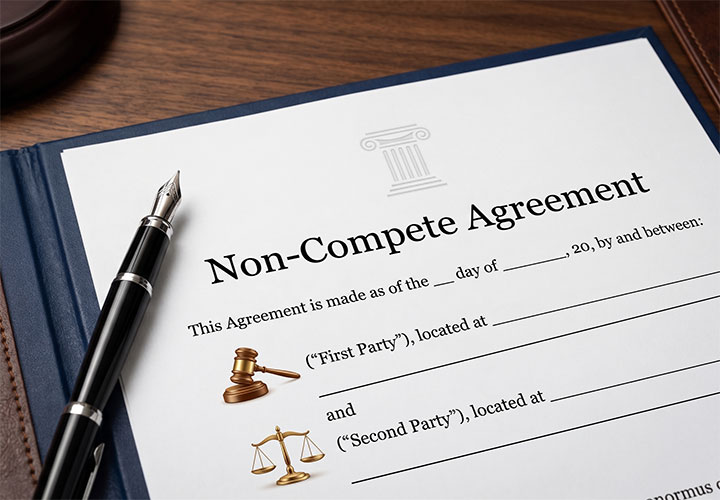
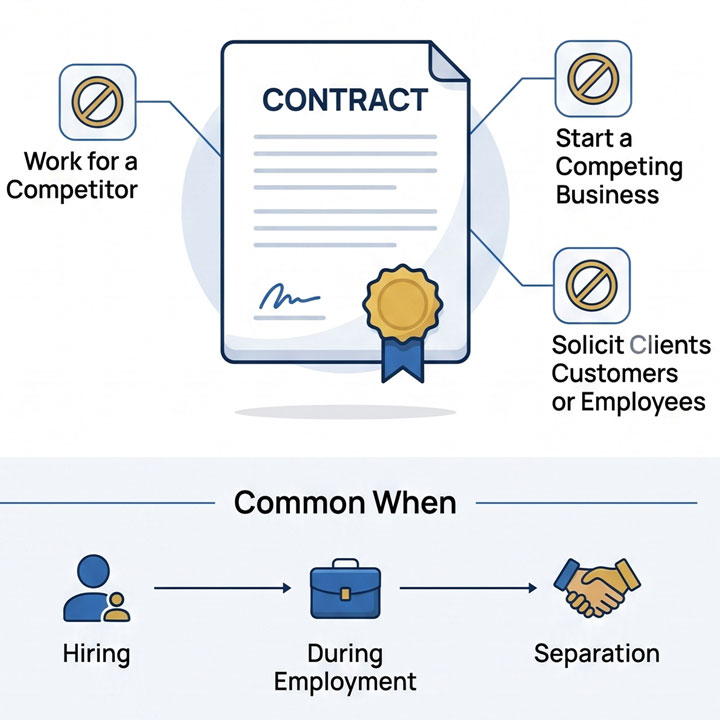
A non-compete agreement is a contract — or a clause within a broader employment contract — in which an employee agrees not to work for a competitor, start a competing business, or solicit the employer's clients or employees for a specified period of time after leaving the company. Non-competes are sometimes presented at the time of hiring, sometimes introduced after the employee has already started working, and sometimes included as part of a severance package.
Related restrictive covenants include non-solicitation agreements (which restrict the employee from soliciting the employer's customers or employees), non-disclosure agreements (which restrict the employee from sharing confidential information or trade secrets), and non-recruitment agreements (which prohibit the employee from hiring away former coworkers). These agreements can be standalone contracts or combined together in a single document, and each type has its own enforceability standards.
Non-Compete Enforceability in West Virginia
West Virginia courts will enforce non-compete agreements, but only if the agreement meets certain requirements. A non-compete must be supported by adequate consideration (something of value exchanged for the employee's promise), must be reasonably limited in geographic scope, must be reasonably limited in duration, must be reasonably limited in the scope of restricted activity, and must not impose an undue hardship on the employee or be contrary to the public interest.
Consideration
If the non-compete is signed at the time of initial hiring, the job itself generally provides adequate consideration. If the non-compete is introduced after the employee has already been working — which is increasingly common — the employer must provide additional consideration beyond continued employment. This might include a raise, promotion, bonus, access to specialized training, or another tangible benefit. A non-compete that is presented to an existing employee without any new consideration may be unenforceable.
Reasonableness
West Virginia courts evaluate the reasonableness of each restriction in the context of the specific employment relationship. A non-compete that prevents a specialized sales representative from working for any competitor within the territory they served for one year may be reasonable, while a non-compete that prevents the same employee from working anywhere in the industry nationwide for five years is almost certainly unreasonable. Courts look at the nature of the employer's business, the employee's role and access to confidential information, the competitive landscape, and the impact the restriction has on the employee's ability to earn a living.
Blue Pencil Doctrine
Some courts apply the "blue pencil" doctrine, which allows a court to modify an overly broad non-compete to make it reasonable rather than striking it down entirely. West Virginia courts have the discretion to narrow the geographic scope, duration, or activity restrictions to bring the agreement within enforceable bounds. This means that even if your non-compete is partially unreasonable, a court might enforce a modified version rather than throwing it out completely.

Non-Compete Enforceability in Ohio
Ohio courts follow a similar reasonableness analysis but have developed some distinct standards. Ohio enforces non-competes when the restraint is no greater than necessary to protect the employer's legitimate business interests, when it does not impose an undue hardship on the employee, and when it is not injurious to the public. Ohio courts recognize protectable interests including trade secrets, confidential business information, customer relationships, and specialized training provided at the employer's expense.
Ohio is also a blue-pencil state, meaning courts can modify unreasonable restrictions rather than voiding the entire agreement. Ohio courts have been somewhat more willing than some other jurisdictions to enforce non-competes, which makes understanding the specific terms of your agreement and the applicable case law important. Our Canton office attorneys are experienced in evaluating and litigating non-compete disputes under Ohio law.
Common Non-Compete Disputes
Former Employer Threatens Enforcement
The most common scenario is a former employee who has taken a new position and receives a cease-and-desist letter from their former employer threatening legal action for violating the non-compete. This is often the employer's opening move, and it does not necessarily mean the non-compete is enforceable or that the former employer will actually file suit. An attorney can evaluate the agreement's enforceability and develop a strategy for responding.
New Employer Concerned About Non-Compete
Job candidates who disclose an existing non-compete sometimes find that prospective employers are reluctant to hire them. An attorney can review the agreement and provide an assessment of its enforceability, which can help the new employer make an informed hiring decision. In some cases, the new employer may be willing to proceed if the non-compete is likely unenforceable or if the new position does not fall within the agreement's restrictions.
Employee Asked to Sign Mid-Employment
Employees who are presented with a non-compete after they have already been working for the company face a difficult choice. Refusing to sign could jeopardize their current employment, but signing without understanding the terms could limit their future career options. An attorney can review the proposed agreement, advise on negotiation strategies, and evaluate whether the employer has provided adequate consideration to make the agreement enforceable.
Non-Compete in a Termination or Severance Context
Employees who are fired sometimes discover that their employer expects them to comply with a non-compete even though the employer ended the relationship. The enforceability of a non-compete after involuntary termination is a contested area of law. Some courts have held that an employer who terminates an employee without cause has weakened its position to enforce a non-compete, particularly when the agreement was not part of a severance package with separate consideration. This is fact-specific and varies by jurisdiction.

Client Reviews
























Non-Compete Agreements and At-Will Employment
The intersection of non-compete agreements and at-will employment raises important questions. If an employer can fire an at-will employee at any time for any reason, but the non-compete prevents that employee from working for a competitor for one or two years, the combined effect can be devastating to the employee's livelihood. Courts in both West Virginia and Ohio consider this dynamic when evaluating reasonableness, and the circumstances of the employee's departure — voluntary resignation versus involuntary termination — can affect the enforceability analysis.

Injunctions and Enforcement Proceedings
Employers who seek to enforce non-competes typically file for a temporary restraining order or preliminary injunction asking the court to immediately prohibit the former employee from working for the competitor. These proceedings move quickly and require the employer to demonstrate a likelihood of success on the merits, irreparable harm that cannot be remedied by money damages alone, and a balance of hardships that favors the employer. Defending against an injunction requires a prompt and well-prepared response, which is why having an attorney evaluate your non-compete before a dispute escalates is valuable.
Helpful Shorts From Our TikTok
Klie Law Office F.A.Q
1. What should I do immediately after a personal injury accident?
After a personal injury accident, your safety comes first. Seek medical attention right away, even if you feel fine, as some injuries may not be immediately apparent. If possible, document the scene by taking photos, gathering witness information, and filing an accident report. Then, contact an experienced personal injury attorney at Klie Law Offices to discuss your rights and next steps.
2. How do I know if I have a valid personal injury claim?
If you were injured because of someone else’s negligence or reckless actions, you may have a valid personal injury claim. Common situations include car accidents, slip and falls, workplace injuries, and dog bites. Our attorneys offer free consultations to review your situation and determine whether you have a case.
3. How much is my personal injury case worth?
The value of a personal injury case depends on several factors, including the severity of your injuries, medical expenses, lost wages, pain and suffering, and long-term impacts on your life. Every case is unique, so we carefully evaluate the details to pursue the maximum compensation available under the law.
4. Will my personal injury case go to court?
Most personal injury cases are settled outside of court through negotiations with insurance companies or at mediation. However, if a fair settlement cannot be reached, Klie Law Offices is prepared to represent you in court and fight for the compensation you deserve.
5. How much does it cost to hire a personal injury lawyer at Klie Law Offices?
Klie Law Offices handles personal injury cases on a contingency fee basis. This means you pay no upfront costs, and we only get paid if we recover compensation for you. Your initial consultation is free, and we’ll explain all fees and terms clearly before you decide to move forward.

Civil Litigation Team
Civil Litigation Attorneys








Administrative Assistant

Civil Litigation Paralegals



Civil Litigation Practice Coordinator

Civil Litigation Law Clerk

Damages for Non-Compete Violations
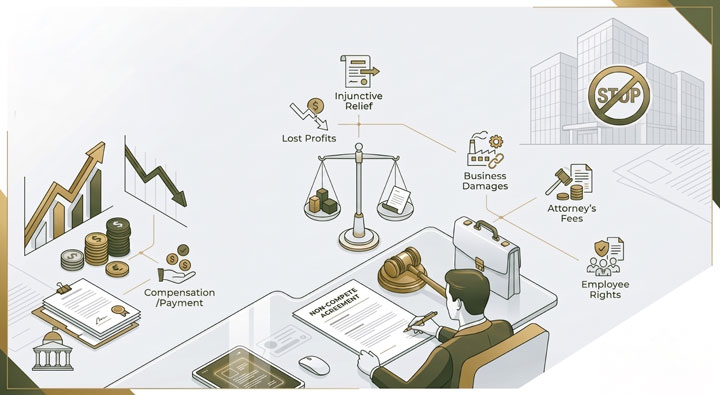
If an employer successfully enforces a non-compete, remedies may include injunctive relief prohibiting the employee from continuing the restricted activity, compensatory damages for lost profits or business, and in some cases attorney's fees. On the employee's side, if the employer files a frivolous or bad-faith enforcement action, the employee may seek recovery of their own attorney's fees and damages for tortious interference with their new employment relationship.
Why Choose Klie Law Offices
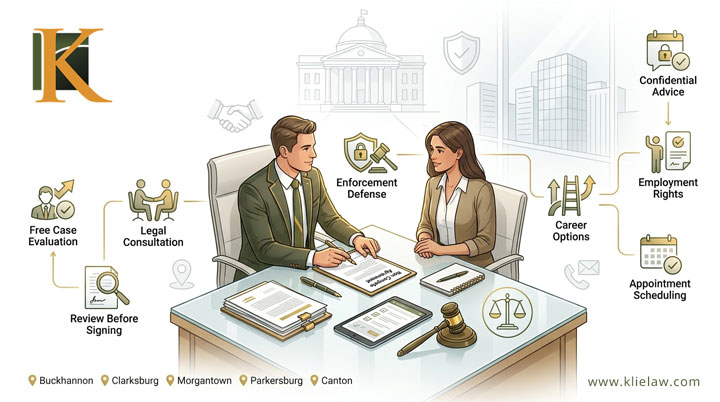
Non-compete disputes require attorneys who understand both the contract law principles governing enforceability and the practical business considerations that drive these disputes. At Klie Law Offices, our employment law team represents employees facing non-compete threats, evaluates agreement enforceability, negotiates with former employers, and litigates when necessary in both West Virginia and Ohio. Whether you need a non-compete reviewed before signing, are facing enforcement action, or need to understand your options after leaving a job, we provide the strategic guidance you need.

Facing a Non-Compete Issue?
Whether you have been threatened with enforcement, need to understand a non-compete before signing, or want to evaluate your options after leaving a job, contact Klie Law Offices for a free case evaluation, or schedule an appointment online. We serve clients from our offices in Buckhannon, Clarksburg, Morgantown, and Parkersburg in West Virginia, and Canton in Ohio.
Office Locations
Buckhannon
21 E Main St, Suite 160
Buckhannon, WV 26201
Map and Directions ↗
Parkersburg
300 Star Avenue, Unit 312
Parkersburg, WV 26101
Map and Directions ↗
Clarksburg
339 W Main St
Clarksburg, WV 26301
Map and Directions ↗
Morgantown
1300 Fort Pierpont Dr, Suite
102, Morgantown, WV 26508
Map and Directions ↗
Canton, OH
4150 Belden Village St NW
Suite 606
Canton OH, 44718
Map and Directions ↗
The first thing you’ll notice when you come to our Law Offices is that we’ll listen to your story. We want to know what you’re going through and what you need. Then, we’ll explain how West Virginia law applies to your specific situation and what your legal options are. There are no cookie-cutter answers here. We create a legal strategy tailored to each client’s individual needs.
Depending on your situation, we will find the right path forward. We are adept at resolving your legal matters through negotiation and mediation whenever possible. But we also won’t hesitate to take your case to trial if that’s what it takes to get the best possible outcome for you.
If you’re facing a legal challenge and need someone in your corner, don’t wait to get the help you deserve. Contact Klie Law Offices today to schedule a confidential consultation and take the first step toward a solution that works for you.