
Child Support









Child Support in West Virginia and Ohio: Understanding Your Rights and Obligations
Child support exists for one fundamental reason: to ensure that children receive the financial resources they need after their parents separate or divorce. Whether you are seeking to establish a child support order, enforce an existing one, or request a modification due to changed circumstances, understanding how child support works in West Virginia and Ohio is essential. At Klie Law Offices, our family law attorneys help both custodial and noncustodial parents navigate the child support process with clarity and confidence.
We handle child support matters from our offices in Buckhannon, Clarksburg, Morgantown, Parkersburg, and Canton, Ohio, serving families throughout both states.
How Child Support Is Calculated in West Virginia
West Virginia uses an income shares model to calculate child support. This approach is based on the principle that children should receive the same proportion of parental income they would have received if the family had remained intact. The calculation considers the combined adjusted gross income of both parents, then allocates a proportionate share of the support obligation to each parent based on their individual income.
Physical Abuse: This includes hitting, slapping, pushing, inappropriate use of restraints, or any force that causes bodily harm. Physical injuries may be visible (bruises, cuts, broken bones) or concealed.


Factors in the Calculation
The child support formula in West Virginia takes into account several key factors, including the gross income of both parents from all sources (wages, salary, bonuses, commissions, self-employment income, rental income, investment income, and certain benefits), the number of children requiring support, the cost of health insurance for the children, work-related childcare expenses, and the parenting time schedule.
West Virginia's child support guidelines produce a presumptive amount, which means the court generally follows the formula unless there is a compelling reason to deviate. Deviations may be appropriate when a child has extraordinary medical or educational needs, when the parents' combined income falls outside the range covered by the guidelines, or when other factors make the guideline amount unjust or inappropriate.
Client Reviews

























What Counts as Income
It is important to understand that income for child support purposes is broadly defined. It includes more than just wages from employment. Self-employment income, rental income, interest and dividends, Social Security benefits, workers' compensation, unemployment benefits, pensions, and trust distributions may all be included. If a parent is voluntarily underemployed or unemployed, the court may impute income — meaning the court calculates support based on what that parent could reasonably be expected to earn given their education, work history, and local job market.
How Child Support Is Calculated in Ohio
Ohio also uses an income shares model, though the specific guidelines and calculation methods differ from West Virginia's. In Ohio, the court determines each parent's gross income, applies certain adjustments, and uses the state's child support schedule to identify the appropriate support amount based on the parents' combined income and the number of children.
Ohio's calculation also accounts for the cost of health insurance for the children, work-related childcare expenses, and any other court-ordered child support obligations that a parent is already paying. As in West Virginia, the Ohio court may deviate from the guideline amount when specific circumstances warrant it.
Our attorneys at the Canton, Ohio office are well-versed in Ohio's child support guidelines and work to ensure that calculations are fair and accurate for both parties.


Establishing a Child Support Order
A child support order can be established as part of a divorce proceeding, a custody case, or a standalone child support action. In West Virginia and Ohio, either parent can petition the court to establish a child support order.
For unmarried parents, establishing paternity is often a necessary first step before a child support order can be entered. Once parentage is legally confirmed, the court can proceed with a support determination using the same guidelines that apply in divorce and custody cases.
The process typically involves both parents providing detailed financial information, including pay stubs, tax returns, documentation of other income sources, and proof of expenses such as health insurance premiums and childcare costs. Our attorneys help clients compile the necessary documentation and present their financial circumstances accurately to the court.
Modifying Child Support
Child support orders are not permanent. When there has been a substantial change in circumstances since the original order was entered, either parent can request a modification of child support. Common reasons for seeking a modification include a significant increase or decrease in either parent's income, a job loss or involuntary reduction in hours, a change in the child's needs such as increased medical or educational expenses, a change in the custody or parenting time arrangement, the addition of other dependents, and changes in health insurance costs or childcare expenses.
In West Virginia, a modification may be warranted when there is a change of 15 percent or more from the existing order based on the current guideline calculation. Ohio has similar provisions. The court will not modify support retroactively, so it is important to file for a modification promptly when your circumstances change rather than waiting and accumulating arrears.

Helpful Shorts From Our TikTok
Klie Law Office F.A.Q
1. What family law services does Klie Law Offices handle?
Klie Law Offices represents clients in a wide range of family law matters, including divorce, child custody and visitation, child support, spousal support, adoption, paternity, protective orders, modifications of existing court orders, and CPS/child protective services cases. We serve families throughout West Virginia from our offices in Buckhannon, Clarksburg, Morgantown, and Parkersburg, as well as clients in the Canton, Ohio area.
2. How much does it cost to hire a family law attorney?
The cost of a family law case depends on factors like the complexity of your situation, whether the matter is contested or uncontested, and the specific issues involved such as custody, property division, or support. Klie Law Offices offers case evaluations so you can discuss your situation and get a clear understanding of what to expect before making any commitments.
3. How long does a divorce take in West Virginia or Ohio?
Timelines vary depending on whether the divorce is contested or uncontested and the specific issues that need to be resolved. In West Virginia, an uncontested divorce can sometimes be finalized in as little as a few weeks after filing, while contested cases may take several months or longer. Ohio offers both divorce and dissolution of marriage options, each with different timelines. An experienced family law attorney can help you understand what to expect based on your circumstances.
4. Can I modify an existing custody or support order?
Yes. If there has been a substantial change in circumstances — such as a job loss, relocation, changes in a child's needs, or a significant change in income — you may be able to petition the court to modify an existing custody, visitation, or support order. Both West Virginia and Ohio courts allow modifications when it can be shown that the change serves the best interests of the child.
5. Do I need an attorney for my family law case?
While you are not legally required to have an attorney, family law cases involve important decisions that affect your children, your finances, and your future. Having an experienced family law attorney helps protect your rights, ensures deadlines and paperwork are handled correctly, and gives you the strongest position whether you're negotiating a settlement or going to court. Contact Klie Law Offices for a case evaluation to discuss your options.

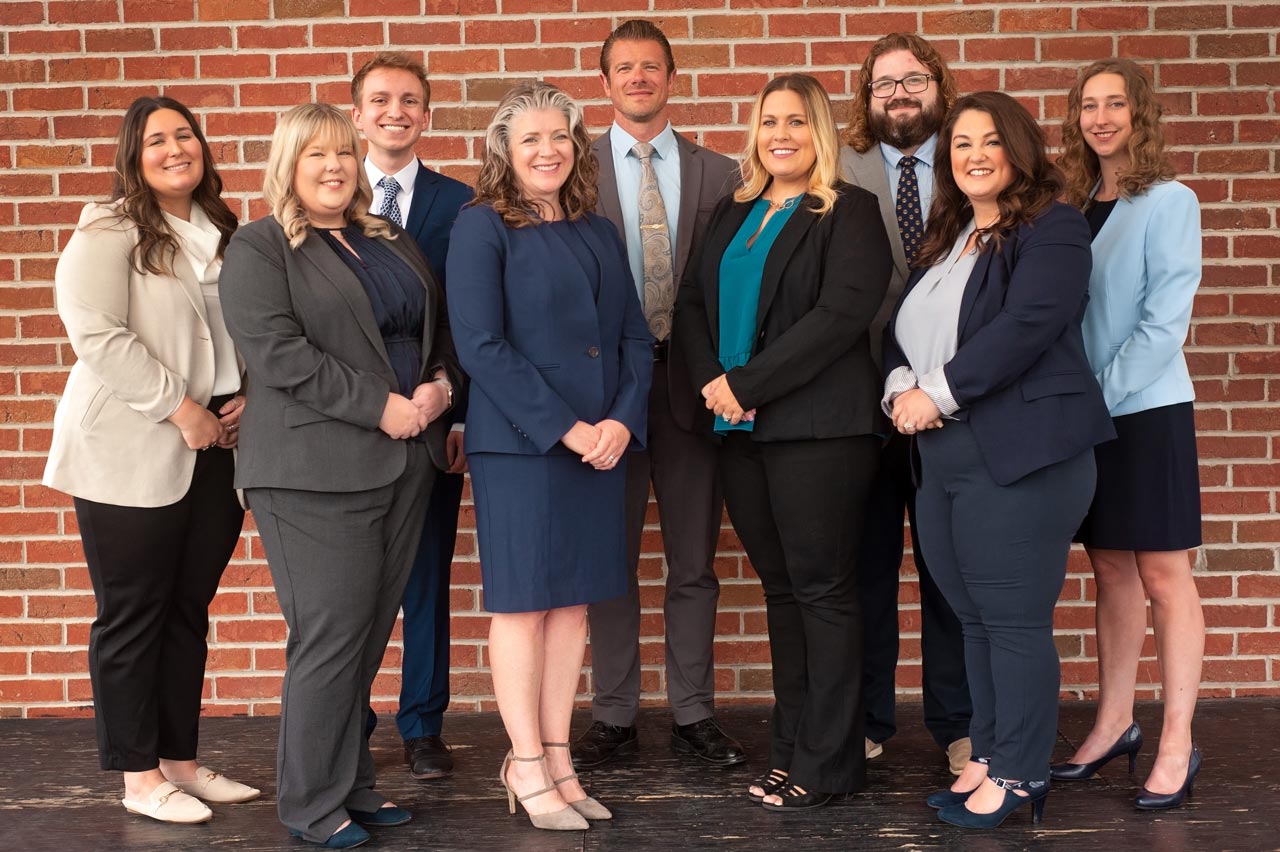
Family Law Legal Team
Family Law Attorneys










Family Law Paralegals









Enforcing Child Support
When a parent fails to pay court-ordered child support, the consequences can be significant. Both West Virginia and Ohio have multiple enforcement mechanisms available to ensure that children receive the financial support they are owed.
Enforcement Tools
Enforcement options may include income withholding, where child support is deducted directly from the paying parent's wages, interception of tax refunds at both the state and federal level, suspension of the delinquent parent's driver's license, professional license, or recreational licenses, liens placed on real estate or personal property, reporting of the delinquency to credit bureaus, contempt of court proceedings, which can result in fines or jail time, and passport denial for parents who owe a specified amount in back support.
Our attorneys assist custodial parents in pursuing enforcement of court orders to hold the noncustodial parent accountable. We also help noncustodial parents who are facing enforcement actions understand their rights and explore options such as requesting a modification if they are genuinely unable to pay the current amount.
Back Child Support and Arrears
When a parent falls behind on child support, the unpaid amounts accumulate as arrears. Arrears are a legal debt that does not go away, even if the current support obligation ends when the child reaches adulthood. Interest may accrue on unpaid arrears, and enforcement actions can continue until the full amount is paid. If you owe back child support, it is critical to address the situation proactively. Filing for a modification or working out a payment arrangement is far better than ignoring the problem and facing increasingly severe enforcement consequences.
Child Support and Custody
It is important to understand that child support and custody or visitation are treated as separate legal issues. A parent cannot withhold visitation because the other parent is behind on child support, and a parent cannot stop paying child support because they are being denied visitation. Both obligations exist independently, and violating either one can result in legal consequences. If you are experiencing problems with either support or parenting time, the proper remedy is to seek enforcement through the court rather than taking matters into your own hands.


Health Insurance and Child Support
In both West Virginia and Ohio, the child support order typically addresses which parent is responsible for providing health insurance coverage for the children. The cost of health insurance premiums attributable to the children is factored into the child support calculation. If neither parent has access to affordable employer-sponsored health insurance, the court may order that coverage be obtained through other means. Unreimbursed medical expenses — such as copays, deductibles, and expenses not covered by insurance — are usually divided between the parents in proportion to their incomes.
Child Support Duration
In West Virginia, child support generally continues until the child turns 18, or until the child turns 20 if they are still attending high school or an approved secondary educational program on a full-time basis. There are limited circumstances under which support may continue beyond these ages, such as when a child has a disability that prevents them from becoming self-supporting.
In Ohio, child support typically continues until the child turns 18, or until age 19 if the child is still attending high school. Ohio courts may also order support to continue for adult children with physical or mental disabilities that prevent self-sufficiency
Why Choose Klie Law Offices for Child Support Matters
Child support issues require precise calculations, thorough documentation, and a clear understanding of the applicable state guidelines. At Klie Law Offices, our experienced family law team handles every aspect of child support cases, from initial establishment to modification and enforcement. We work to ensure that support amounts are calculated accurately and that the financial needs of the children are properly addressed.
We also understand that child support cases are often closely tied to custody disputes, divorce proceedings, and other family law matters. Our attorneys take a comprehensive approach, addressing all related issues together to achieve the best possible outcome for you and your children.
Office Locations
Buckhannon
21 E Main St, Suite 160
Buckhannon, WV 26201
Map and Directions ↗
Parkersburg
300 Star Avenue, Unit 312
Parkersburg, WV 26101
Map and Directions ↗
Clarksburg
339 W Main St
Clarksburg, WV 26301
Map and Directions ↗
Morgantown
1300 Fort Pierpont Dr, Suite
102, Morgantown, WV 26508
Map and Directions ↗
Canton, OH
4150 Belden Village St NW
Suite 606
Canton OH, 44718
Map and Directions ↗
The first thing you’ll notice when you come to our Law Offices is that we’ll listen to your story. We want to know what you’re going through and what you need. Then, we’ll explain how West Virginia law applies to your specific situation and what your legal options are. There are no cookie-cutter answers here. We create a legal strategy tailored to each client’s individual needs.
Depending on your situation, we will find the right path forward. We are adept at resolving your legal matters through negotiation and mediation whenever possible. But we also won’t hesitate to take your case to trial if that’s what it takes to get the best possible outcome for you.
If you’re facing a legal challenge and need someone in your corner, don’t wait to get the help you deserve. Contact Klie Law Offices today to schedule a confidential consultation and take the first step toward a solution that works for you.