
SEXUAL HARASSMENT









Sexual Harassment in the Workplace: West Virginia and Ohio
No one should have to endure sexual harassment as a condition of earning a living. Whether it takes the form of unwanted advances, explicit comments, inappropriate touching, or a hostile work environment that makes it impossible to do your job, sexual harassment is illegal under both federal and state law. At Klie Law Offices, our employment law attorneys represent workers throughout West Virginia and Ohio who have been subjected to sexual harassment at work. We help our clients hold their harassers and their employers accountable and recover the compensation they deserve.
We handle sexual harassment cases from our offices in Buckhannon, Clarksburg, Morgantown, Parkersburg, and Canton, Ohio.
What Qualifies as Sexual Harassment?
Sexual harassment is a form of sex-based workplace discrimination prohibited by Title VII of the Civil Rights Act of 1964, the West Virginia Human Rights Act, and Ohio Revised Code Chapter 4112. It encompasses a wide range of unwelcome conduct of a sexual nature that affects an employee's working conditions. The law recognizes two primary categories of sexual harassment: quid pro quo harassment and hostile work environment harassment.
Quid Pro Quo Harassment
Quid pro quo — Latin for "this for that" — occurs when a person in a position of authority conditions an employment benefit or threatens an employment consequence on the employee's submission to sexual conduct. This includes situations where a supervisor offers a promotion, raise, favorable assignment, or continued employment in exchange for sexual favors, or where a supervisor threatens termination, demotion, schedule changes, or other negative consequences if the employee refuses sexual advances. Quid pro quo harassment requires that the harasser have authority over the victim's employment, and a single incident can be sufficient to establish liability.
Hostile Work Environment
A hostile work environment exists when unwelcome sexual conduct is so severe or pervasive that it creates an intimidating, hostile, or offensive working environment that unreasonably interferes with the employee's ability to perform their job. Unlike quid pro quo harassment, hostile work environment claims do not require the harasser to be a supervisor — coworkers, subordinates, and even third parties such as clients or vendors can create a hostile work environment for which the employer may be liable.
Conduct that can contribute to a hostile work environment includes sexual comments, jokes, or innuendo, displaying sexually explicit images or materials, unwanted touching, hugging, or physical contact, staring, leering, or making sexual gestures, repeated requests for dates after being told no, spreading sexual rumors about an employee, making comments about an employee's body or appearance, and sending sexually explicit messages or images. Courts evaluate the totality of the circumstances — including the frequency of the conduct, its severity, whether it is physically threatening or humiliating, and whether it unreasonably interferes with the employee's work — to determine whether the hostile work environment threshold has been met.


Who Can Be a Victim of Sexual Harassment?
Sexual harassment can happen to anyone regardless of gender. Men can be harassed by women, women can be harassed by men, and same-sex harassment is equally actionable under federal and state law. The harasser does not have to be of the opposite sex, and the victim does not have to be the direct target of the harassment — an employee who is adversely affected by harassing conduct directed at others in the workplace can also have a claim.
Employer Liability for Sexual Harassment
Understanding when the employer — not just the individual harasser — is legally responsible is critical in sexual harassment cases, because individual harassers often lack the resources to pay significant damages while employers do.
Supervisor Harassment
When a supervisor's harassment results in a tangible employment action — such as termination, demotion, failure to promote, or a significant change in duties — the employer is automatically liable. When the harassment does not result in a tangible employment action, the employer may raise an affirmative defense by showing that it exercised reasonable care to prevent and correct harassment and that the employee unreasonably failed to use the employer's preventive or corrective opportunities. This defense is not available when a tangible employment action occurred.
Coworker and Third-Party Harassment
When the harasser is a coworker rather than a supervisor, the employer is liable if it knew or should have known about the harassment and failed to take prompt, effective corrective action. This is why reporting harassment to the employer is important — it puts the employer on notice and triggers its obligation to respond. If the employer ignores the complaint, conducts an inadequate investigation, or fails to stop the harassment, it becomes liable for the ongoing hostile work environment.

Client Reviews
























Reporting Sexual Harassment
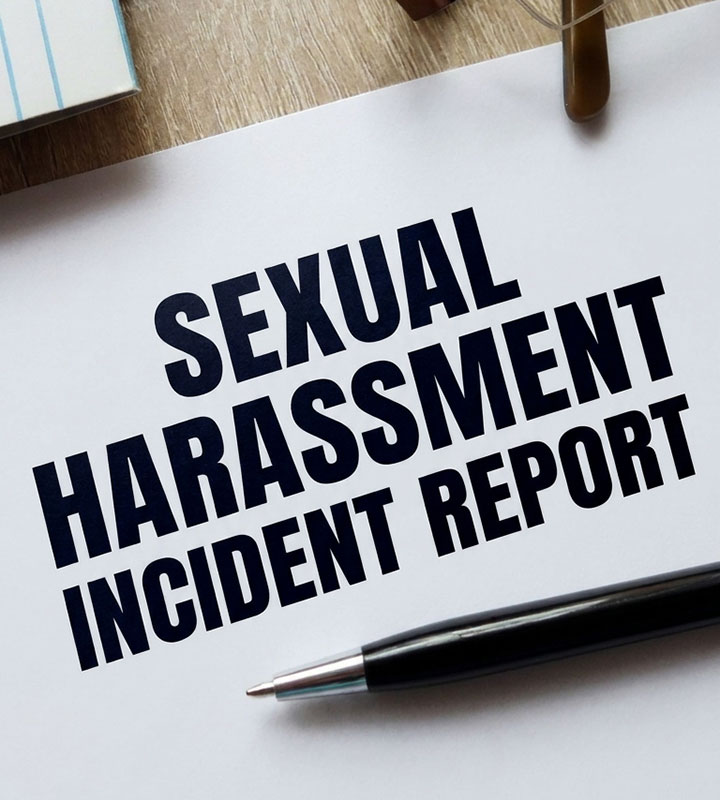
If you are experiencing sexual harassment at work, reporting it creates a record that strengthens your legal position and triggers the employer's duty to respond. If your employer has a harassment complaint procedure, follow it. Report the harassment in writing if possible — an email to HR or management creates a dated, documented record. Keep your own copies of every report you make. If your employer does not have a formal procedure, report the harassment to your supervisor, your supervisor's supervisor, or any member of management.
If your employer fails to act on your complaint, you have the right to file a charge with the Equal Employment Opportunity Commission, the West Virginia Human Rights Commission, or the Ohio Civil Rights Commission. These agencies investigate harassment complaints and can pursue enforcement action against the employer. Filing an agency charge is also typically a prerequisite to filing a private lawsuit under Title VII.
Retaliation Is Illegal
Many employees fear reporting sexual harassment because they worry about retaliation. Federal and state law explicitly prohibit retaliation against employees who report harassment, participate in harassment investigations, or file harassment complaints. Retaliation claims can be brought even if the underlying harassment claim is not ultimately sustained, because the law protects the act of reporting in good faith regardless of the outcome. If your employer retaliates against you for reporting sexual harassment, the retaliation itself is an independent legal violation that can result in additional damages.
Damages in Sexual Harassment Cases
Employees who prevail in sexual harassment cases may recover compensatory damages for emotional distress, mental anguish, and loss of enjoyment of life, back pay and lost benefits if the harassment led to termination, demotion, or constructive discharge, front pay or reinstatement, punitive damages in cases involving particularly egregious or malicious conduct, and attorney's fees and litigation costs. The West Virginia Human Rights Act does not cap compensatory or punitive damages, which can result in substantial recoveries in state court claims. Federal Title VII claims are subject to statutory caps on compensatory and punitive damages that vary based on the size of the employer.

Helpful Shorts From Our TikTok
Klie Law Office F.A.Q
1. What should I do immediately after a personal injury accident?
After a personal injury accident, your safety comes first. Seek medical attention right away, even if you feel fine, as some injuries may not be immediately apparent. If possible, document the scene by taking photos, gathering witness information, and filing an accident report. Then, contact an experienced personal injury attorney at Klie Law Offices to discuss your rights and next steps.
2. How do I know if I have a valid personal injury claim?
If you were injured because of someone else’s negligence or reckless actions, you may have a valid personal injury claim. Common situations include car accidents, slip and falls, workplace injuries, and dog bites. Our attorneys offer free consultations to review your situation and determine whether you have a case.
3. How much is my personal injury case worth?
The value of a personal injury case depends on several factors, including the severity of your injuries, medical expenses, lost wages, pain and suffering, and long-term impacts on your life. Every case is unique, so we carefully evaluate the details to pursue the maximum compensation available under the law.
4. Will my personal injury case go to court?
Most personal injury cases are settled outside of court through negotiations with insurance companies or at mediation. However, if a fair settlement cannot be reached, Klie Law Offices is prepared to represent you in court and fight for the compensation you deserve.
5. How much does it cost to hire a personal injury lawyer at Klie Law Offices?
Klie Law Offices handles personal injury cases on a contingency fee basis. This means you pay no upfront costs, and we only get paid if we recover compensation for you. Your initial consultation is free, and we’ll explain all fees and terms clearly before you decide to move forward.

Civil Litigation Team
Civil Litigation Attorneys








Administrative Assistant

Civil Litigation Paralegals



Civil Litigation Practice Coordinator

Civil Litigation Law Clerk


Sexual Harassment and Constructive Discharge
Some employees are forced to resign because the harassment is so severe and the employer so unresponsive that remaining in the job becomes intolerable. This is known as constructive discharge, and the law treats it as the legal equivalent of being fired. If you resigned because of sexual harassment that your employer refused to address, you may still have a claim for all damages that would be available if you had been terminated, including back pay and front pay. However, constructive discharge claims require showing that the working conditions were so intolerable that a reasonable person would have felt compelled to resign.
West Virginia Sexual Harassment Protections
The West Virginia Human Rights Act prohibits sexual harassment and applies to employers with 12 or more employees. The Act provides a broad definition of harassment and allows for compensatory and punitive damages without the caps that apply to federal Title VII claims. Claims must be filed with the West Virginia Human Rights Commission within 365 days of the last act of harassment, though employees may also choose to file directly in state court. West Virginia's strong public policy protections also support claims by employees who are fired or constructively discharged due to harassment or for reporting harassment.
Ohio Sexual Harassment Protections
Ohio Revised Code Chapter 4112 prohibits sexual harassment and applies to employers with four or more employees — a broader reach than both Title VII and the West Virginia Human Rights Act. Ohio law allows claims to be filed with the Ohio Civil Rights Commission or directly in state court. Ohio courts have recognized both quid pro quo and hostile work environment claims and have awarded significant damages in sexual harassment cases. Our Canton office attorneys are experienced in pursuing sexual harassment claims under Ohio's specific statutory framework.
What to Do If You Are Being Sexually Harassed
If you are currently experiencing sexual harassment at work, it is important to document every incident — write down what happened, when, where, who was involved, and who witnessed it. Save any emails, text messages, photos, or other evidence of the harassment. Report the harassment through your employer's complaint procedure and keep a copy of your report. Do not delete any communications, even if they are upsetting. Consult with an employment attorney to understand your options — courts evaluate the totality of the circumstances, and patterns of conduct that seem minor individually can meet the legal threshold when viewed together. For additional information about what steps to take, see our page on what to do if you are a victim of sexual harassment.

Why Choose Klie Law Offices
Sexual harassment cases require attorneys who are sensitive to the deeply personal nature of these claims and aggressive in holding employers accountable. At Klie Law Offices, our employment law team handles sexual harassment claims with the discretion our clients deserve and the tenacity their cases demand. We represent employees at every stage — from initial complaint through litigation — and fight to recover the maximum damages available under federal and state law.
You Do Not Have to Tolerate Sexual Harassment
If you are being sexually harassed at work, you have legal options. Contact Klie Law Offices for a free case evaluation, or schedule an appointment online. We serve clients from our offices in Buckhannon, Clarksburg, Morgantown, and Parkersburg in West Virginia, and Canton in Ohio.

Office Locations
Buckhannon
21 E Main St, Suite 160
Buckhannon, WV 26201
Map and Directions ↗
Parkersburg
300 Star Avenue, Unit 312
Parkersburg, WV 26101
Map and Directions ↗
Clarksburg
339 W Main St
Clarksburg, WV 26301
Map and Directions ↗
Morgantown
1300 Fort Pierpont Dr, Suite
102, Morgantown, WV 26508
Map and Directions ↗
Canton, OH
4150 Belden Village St NW
Suite 606
Canton OH, 44718
Map and Directions ↗
The first thing you’ll notice when you come to our Law Offices is that we’ll listen to your story. We want to know what you’re going through and what you need. Then, we’ll explain how West Virginia law applies to your specific situation and what your legal options are. There are no cookie-cutter answers here. We create a legal strategy tailored to each client’s individual needs.
Depending on your situation, we will find the right path forward. We are adept at resolving your legal matters through negotiation and mediation whenever possible. But we also won’t hesitate to take your case to trial if that’s what it takes to get the best possible outcome for you.
If you’re facing a legal challenge and need someone in your corner, don’t wait to get the help you deserve. Contact Klie Law Offices today to schedule a confidential consultation and take the first step toward a solution that works for you.