
EMPLOYER RETALIATION









Employer Retaliation in West Virginia and Ohio
You exercised a legal right, reported wrongdoing, or stood up for yourself or a coworker — and now your employer is making you pay for it. Employer retaliation is one of the most common employment law violations, and it is illegal under both federal and state law. Whether you were fired, demoted, had your hours cut, or were subjected to a hostile work environment after engaging in protected activity, you have the right to fight back. At Klie Law Offices, our employment law attorneys help workers throughout West Virginia and Ohio hold retaliatory employers accountable.
We handle retaliation cases from our offices in Buckhannon, Clarksburg, Morgantown, Parkersburg, and Canton, Ohio.
What Is Employer Retaliation?
Employer retaliation occurs when an employer takes an adverse action against an employee because the employee engaged in a legally protected activity. The retaliation can be direct and obvious — like firing someone the day after they file a complaint — or subtle and gradual, such as reassigning someone to less desirable duties, excluding them from meetings, or creating conditions designed to force them to resign.
Three elements must generally be present for a retaliation claim: the employee engaged in a protected activity, the employer took an adverse action against the employee, and there is a causal connection between the protected activity and the adverse action. Our attorneys evaluate each of these elements carefully to determine whether you have a viable retaliation claim.

What Counts as Protected Activity?
Federal and state laws protect employees from retaliation for a wide range of activities. Understanding what qualifies as protected activity is the first step in evaluating a retaliation claim.
Reporting Discrimination or Harassment
Filing a complaint about workplace discrimination or sexual harassment — whether internally to HR or externally to the EEOC, the West Virginia Human Rights Commission, or the Ohio Civil Rights Commission — is protected activity. You are also protected if you participate in someone else's discrimination investigation or lawsuit as a witness, even if the underlying complaint is ultimately not sustained.
Reporting Safety Violations
Employees who report unsafe working conditions to OSHA or to their employer, or who refuse to perform work that they reasonably believe poses an imminent danger, are protected from retaliation under the Occupational Safety and Health Act and related state laws.
Filing Wage and Hour Complaints
Reporting unpaid overtime, wage theft, or other violations of the Fair Labor Standards Act or state wage laws is protected activity. Employers cannot retaliate against employees for asserting their right to be paid correctly.
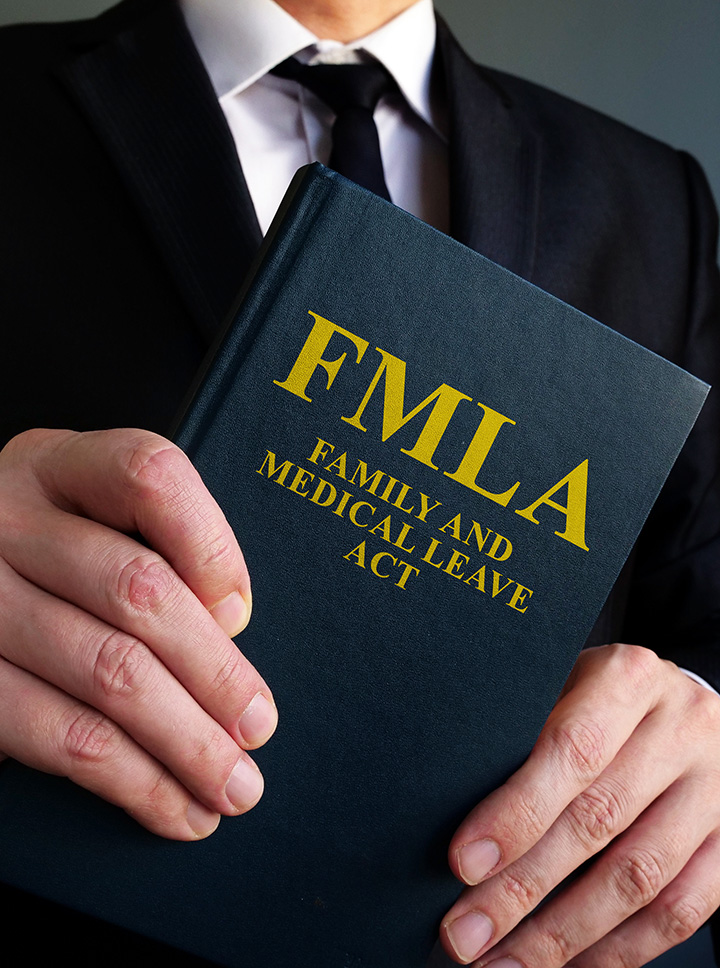
Requesting FMLA Leave
Requesting or taking leave under the Family and Medical Leave Act is protected. An employer who fires, demotes, or otherwise penalizes an employee for requesting or using FMLA leave is engaging in illegal retaliation.
Filing Workers' Compensation Claims
Both West Virginia and Ohio prohibit employers from retaliating against employees who file workers' compensation claims for workplace injuries. West Virginia's public policy exception to at-will employment provides particularly strong protection in this area.
Whistleblowing
Employees who report illegal conduct by their employer — whether to management, a government agency, or law enforcement — are protected from retaliation under various federal and state whistleblower statutes. This includes reporting fraud, environmental violations, financial misconduct, patient safety concerns under the West Virginia Patient Safety Act, and other unlawful activity.
Other Protected Activities
Additional activities protected from retaliation include serving on a jury, voting or taking time off to vote, serving in the military or National Guard, filing for unemployment benefits, cooperating with a government investigation of the employer, and asserting rights under collective bargaining agreements.
What Counts as an Adverse Action?
Retaliation is not limited to termination. Any action by the employer that would discourage a reasonable employee from engaging in protected activity can qualify as an adverse action. Common forms of retaliation include termination or constructive discharge (making conditions so intolerable that the employee is forced to resign), demotion or reduction in title or responsibilities, reduction in pay, hours, or benefits, transfer to a less desirable position or location, negative performance reviews that do not reflect actual performance, exclusion from meetings, projects, or advancement opportunities, increased scrutiny or micromanagement, verbal abuse, threats, or intimidation, and blacklisting or providing negative references to future employers.
The key question is whether the employer's action would have a chilling effect on other employees considering whether to exercise their legal rights. Courts look at the totality of the employer's conduct, and even a pattern of individually minor actions can amount to actionable retaliation when viewed together.

Proving Retaliation
Retaliation cases often hinge on circumstantial evidence because employers rarely admit that their actions were retaliatory. Several types of evidence can help establish the causal connection between the protected activity and the adverse action.
Timing
Close proximity in time between the protected activity and the adverse action is often the strongest evidence of retaliation. If you filed a complaint on Monday and were fired on Friday, that timing alone raises a strong inference of retaliation. The shorter the gap between the protected activity and the adverse action, the stronger the inference.
Inconsistent Reasons
If the employer's stated reason for the adverse action is inconsistent with your work history, contradicted by the facts, or has changed over time, that inconsistency can be evidence that the stated reason is pretextual — a cover story for the real, retaliatory motivation.
Disparate Treatment
If other employees who engaged in similar conduct were not subjected to the same adverse action, that disparate treatment suggests that the real reason for your treatment was your protected activity, not the stated reason.
Pattern of Behavior
If the employer has a history of retaliating against employees who engage in protected activities, that pattern can support your individual claim. It demonstrates that the employer has a culture of punishing employees who exercise their rights.
Client Reviews











West Virginia Retaliation Protections
West Virginia provides strong protections against employer retaliation through a combination of statutory provisions and common law doctrines. The West Virginia Human Rights Act prohibits retaliation for filing discrimination complaints. The Whistle-Blower Law protects public employees who report waste and wrongdoing. And the broad public policy exception to at-will employment — recognized by West Virginia courts — provides a cause of action for employees fired in violation of substantial public policy. This public policy exception is one of the most employee-friendly in the nation and has been applied to a wide range of retaliatory conduct.
Ohio Retaliation Protections
Ohio provides retaliation protections through Ohio Revised Code Chapter 4112 (anti-discrimination retaliation), specific whistleblower statutes for public employees, workers' compensation anti-retaliation provisions, and the common law public policy tort recognized by Ohio courts. Our Canton attorneys are experienced in applying Ohio's specific retaliation frameworks and filing claims with the appropriate state and federal agencies.

What to Do If You Are Experiencing Retaliation
If you believe your employer is retaliating against you, it is important to act strategically to protect your rights. Document everything — keep a detailed, contemporaneous record of every retaliatory action, including dates, times, what happened, who was involved, and any witnesses. Save all relevant communications including emails, text messages, and memos. Report the retaliation through your employer's internal complaint process if one exists, as this creates a record and may trigger additional legal protections. Do not resign if you can avoid it, as leaving voluntarily can complicate your legal claims. And consult with an employment attorney promptly, because many retaliation claims have strict filing deadlines that can be as short as 180 days.
Helpful Shorts From Our TikTok
Klie Law Offices FAQ
1. What should I do immediately after a personal injury accident?
After a personal injury accident, your safety comes first. Seek medical attention right away, even if you feel fine, as some injuries may not be immediately apparent. If possible, document the scene by taking photos, gathering witness information, and filing an accident report. Then, contact an experienced personal injury attorney at Klie Law Offices to discuss your rights and next steps.
2. How do I know if I have a valid personal injury claim?
If you were injured because of someone else’s negligence or reckless actions, you may have a valid personal injury claim. Common situations include car accidents, slip and falls, workplace injuries, and dog bites. Our attorneys offer free consultations to review your situation and determine whether you have a case.
3. How much is my personal injury case worth?
The value of a personal injury case depends on several factors, including the severity of your injuries, medical expenses, lost wages, pain and suffering, and long-term impacts on your life. Every case is unique, so we carefully evaluate the details to pursue the maximum compensation available under the law.
4. Will my personal injury case go to court?
Most personal injury cases are settled outside of court through negotiations with insurance companies or at mediation. However, if a fair settlement cannot be reached, Klie Law Offices is prepared to represent you in court and fight for the compensation you deserve.
5. How much does it cost to hire a personal injury lawyer at Klie Law Offices?
Klie Law Offices handles personal injury cases on a contingency fee basis. This means you pay no upfront costs, and we only get paid if we recover compensation for you. Your initial consultation is free, and we’ll explain all fees and terms clearly before you decide to move forward.

Civil Litigation Team
Civil Litigation Attorneys








Administrative Assistant

Civil Litigation Paralegals



Civil Litigation Practice Coordinator

Civil Litigation Law Clerk


Damages in Retaliation Cases
Employees who prevail in retaliation claims may be entitled to significant remedies, including back pay and lost benefits from the date of the adverse action, front pay or reinstatement to the former position, compensatory damages for emotional distress and mental anguish, punitive damages designed to punish particularly egregious employer conduct, and attorney's fees and litigation costs. The specific damages available depend on the statute under which the claim is brought and the facts of the case.
Why Choose Klie Law Offices
Retaliation cases require attorneys who can connect the dots between your protected activity and the employer's adverse action, and who are prepared to challenge the pretextual reasons employers use to disguise their true motivations. At Klie Law Offices, our employment law team has extensive experience identifying and proving retaliation in both West Virginia and Ohio. We represent employees at every stage of the process — from filing agency complaints to litigating in court — and we fight to recover the full damages our clients deserve.


Do Not Let Your Employer Get Away with Retaliation
If you have been punished for doing the right thing, you have legal options. Contact Klie Law Offices for a free case evaluation, or schedule an appointment online. We serve clients from our offices in Buckhannon, Clarksburg, Morgantown, and Parkersburg in West Virginia, and Canton in Ohio.
Office Locations
Buckhannon
21 E Main St, Suite 160
Buckhannon, WV 26201
Map and Directions ↗
Parkersburg
300 Star Avenue, Unit 312
Parkersburg, WV 26101
Map and Directions ↗
Clarksburg
339 W Main St
Clarksburg, WV 26301
Map and Directions ↗
Morgantown
1300 Fort Pierpont Dr, Suite
102, Morgantown, WV 26508
Map and Directions ↗
Canton, OH
4150 Belden Village St NW
Suite 606
Canton OH, 44718
Map and Directions ↗
The first thing you’ll notice when you come to our Law Offices is that we’ll listen to your story. We want to know what you’re going through and what you need. Then, we’ll explain how West Virginia law applies to your specific situation and what your legal options are. There are no cookie-cutter answers here. We create a legal strategy tailored to each client’s individual needs.
Depending on your situation, we will find the right path forward. We are adept at resolving your legal matters through negotiation and mediation whenever possible. But we also won’t hesitate to take your case to trial if that’s what it takes to get the best possible outcome for you.
If you’re facing a legal challenge and need someone in your corner, don’t wait to get the help you deserve. Contact Klie Law Offices today to schedule a confidential consultation and take the first step toward a solution that works for you.