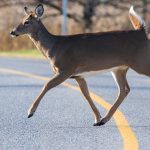
If you drive here this fall, a deer accident in West Virginia is more likely than almost anywhere else in the country. State Farm's latest animal collision report, released September 15, 2026, ranked West Virginia first in the nation again. Drivers here have about a 1 in 46 chance of an animal collision claim this year, compared with 1 in 145 nationally. November, October, and December are the riskiest months, and dusk on a two-lane road is the classic setup.
Most deer strikes are exactly what they look like: a smashed headlight, a comprehensive insurance claim, and a ruined morning. But some are not. When a driver swerves across the center line on Route 33 to miss a deer, or the pickup behind you can't stop after you brake, the deer isn't the one who caused your injuries. A person did, and that person's insurance may owe you far more than your own policy will pay.
The car accident lawyers at Klie Law Offices help injured drivers and passengers in West Virginia and Ohio figure out which kind of crash they were in. We handle injury cases on a contingency fee, so a free case evaluation costs you nothing.
Why Does West Virginia Keep Ranking First?
West Virginia has held the top spot in State Farm's rankings for more than a decade. This year's odds are actually a little better than last year's 1 in 40, but the state still leads the country by a wide margin. Nationally, State Farm estimates more than 1.6 million animal collision claims were filed between July 1, 2025, and June 30, 2026. Deer are the animal most often involved, and fall is when they move the most.
Our roads do the rest. Long stretches of rural two-lane highway through Upshur, Lewis, Harrison, and Wood counties, heavy commuting on I-79 and US-50, and fields and woods right up to the pavement put drivers and deer in the same place at the same time. Ohio drivers aren't immune either. Rural roads in Stark and the surrounding counties see the same fall surge.
How to Lower Your Risk This Fall
You can't control what jumps out of the woods, but a few habits cut the odds of a serious crash:
- Watch the clock. Deer move most around dawn and dusk. Once the clocks fall back on Sunday, November 1, the evening commute happens right in that window.
- Expect more than one. If a deer crosses in front of you, slow down. Others are often right behind it.
- Brake, don't swerve. Staying in your lane and braking firmly is usually safer than jerking the wheel toward oncoming traffic or a ditch.
- Use your high beams on empty rural roads so you can spot eyes along the shoulder sooner.
When a Deer Crash Is Only a Comprehensive Claim
If a deer jumped into your path, you hit it, and no other vehicle was involved, the claim usually goes through the comprehensive coverage on your own auto policy. Comprehensive pays for damage to your vehicle from an animal strike, minus your deductible. Medical payments coverage, if you carry it, may help with early medical bills. In that situation, there is usually no one else to hold responsible.
That is the story insurance adjusters tell about every deer crash. The problem is that many deer-related crashes involve more than one vehicle, and that changes everything.
When a Deer Accident in West Virginia Is Someone Else's Fault
A deer can start a crash without being the legal cause of your injuries. These are the situations where another driver may be responsible:
- The swerve. A driver jerks the wheel to miss a deer and crosses the center line or runs you off the road. Drivers are expected to keep control of their vehicles, and a swerve into another lane is often more dangerous than hitting the animal.
- The chain reaction. You brake hard for a deer and the driver behind you doesn't stop in time. Following too closely is one of the most common forms of negligence in any rear-end crash.
- Too fast for conditions. A driver speeding on a dark, wooded road in November has less time to react to anything, including a deer, a stopped car, or you.
- Distraction. A driver looking at a phone doesn't see the deer or the brake lights ahead. Phone records and vehicle data can prove it.
- The driver of your own car. If you were a passenger, the person driving may bear some fault, and their liability coverage may owe you, even if they are a friend or family member.
Motorcyclists face the worst of it. A deer strike or a swerving car can throw a rider off the bike in an instant. If you ride, learn more about motorcycle accident claims.
How Is Fault Split in West Virginia and Ohio?
Insurance companies love to argue that you share the blame. Maybe you were a few miles over the limit, or you braked hard. Here is how the law actually handles that:
- West Virginia uses modified comparative fault under W. Va. Code § 55-7-13c. Your own fault does not bar your recovery unless it is greater than the combined fault of everyone else responsible. If you are found 20 percent at fault, your damages are reduced by 20 percent. Even at an even 50-50 split, you can still recover half.
- Ohio follows a similar rule. You can recover as long as your share of fault is not greater than the combined fault of the others, and your damages are reduced by your percentage.
In most West Virginia cases, each defendant pays only its own share of the fault, and juries can consider the fault of people who aren't part of the lawsuit. That makes it important to identify every driver and vehicle involved from the very start.
Insurance Coverage That Matters After a Deer Crash
Depending on what happened, several coverages can come into play:
- The at-fault driver's liability coverage pays for your injuries when another driver caused the crash.
- Uninsured and underinsured motorist coverage can step in when that driver has no insurance or not enough.
- Medical payments coverage on your own policy can help with early medical bills regardless of fault.
- Comprehensive coverage handles vehicle damage from the animal strike itself.
Adjusters don't always volunteer which coverages apply. Our guide to who pays after a car accident explains how coverage stacks up, and our insurance company FAQs cover the tactics to watch for.
What to Do After a Deer-Related Crash
- Get safe and call 911. Turn on your hazard lights and stay out of the travel lane. Don't walk up to an injured deer.
- Get a police report. It documents the other vehicles, the road, and the conditions. Here is how to get your West Virginia crash report.
- Photograph everything. Vehicle positions, skid marks, damage, the road, the lighting, and any deer hair or blood on your vehicle.
- Collect names and insurance from every driver, and contact information from any witnesses.
- Get checked out. Neck, back, and head injuries often show up hours or days later, and a gap in treatment is something insurers use against you.
- Skip the recorded statement. Don't give the other driver's insurer a recorded statement before you talk to a lawyer.
Our full checklist of what to do after a car accident walks through each step in more detail.
Frequently Asked Questions
Is hitting a deer an at-fault accident in West Virginia?
Usually not. A single-vehicle deer strike is typically handled under your comprehensive coverage. But if another driver's swerving, speeding, or tailgating caused a crash, that driver can be held responsible for your injuries.
Can I sue a driver who swerved to avoid a deer and hit me?
You may be able to. Drivers must keep control of their vehicles, and swerving into another lane can be negligent even when an animal started the chain of events. The specific facts of the crash decide the claim.
I was a passenger. Who pays for my injuries?
A passenger may have a claim against the liability coverage of the at-fault driver, which can include the driver of the car you were riding in. Uninsured motorist and medical payments coverage may also apply.
How long do I have to file a claim?
In both West Virginia and Ohio, most personal injury lawsuits must be filed within two years of the crash. Evidence like vehicle data and witness memories fades much faster, so it pays to act early.
What does it cost to talk to a lawyer?
Nothing. Klie Law Offices offers a free case evaluation and handles injury cases on a contingency fee, so you pay no attorney fees unless we recover money for you.
Don't Let the Deer Take the Blame for Someone Else's Mistake
After a crash, it is easy to accept the adjuster's version: bad luck, a deer, nobody's fault. Sometimes that's true. When it isn't, the difference between a comprehensive claim and a liability claim can be the difference between paying your own medical bills and getting fully compensated for your injuries.
Klie Law Offices has fought for injured West Virginians since 2005, and we take injury cases with no fee unless we win. Get your free case evaluation or book an appointment online. Founding attorney Erika Klie Kolenich and our team serve accident victims from Buckhannon, Clarksburg, Morgantown, Parkersburg, and Canton, Ohio. See our full personal injury practice.