
PAID LEAVE









Paid Leave Rights in West Virginia and Ohio
Paid leave — whether for vacation, sick time, personal days, or holidays — is one of the most valued employment benefits. But many workers do not fully understand their rights when it comes to accruing, using, and being paid for leave time. Employers sometimes deny earned leave, change policies retroactively, refuse to pay out accrued leave at termination, or retaliate against employees who use their leave. At Klie Law Offices, our employment law attorneys help workers throughout West Virginia and Ohio protect their paid leave rights and recover compensation when employers violate the law or their own policies.
We handle paid leave cases from our offices in Buckhannon, Clarksburg, Morgantown, Parkersburg, and Canton, Ohio.
The Legal Landscape of Paid Leave
Neither federal law nor West Virginia or Ohio state law currently requires most private employers to provide paid vacation, sick time, or personal days. The primary federal leave law — the Family and Medical Leave Act — guarantees unpaid leave for qualifying medical and family reasons but does not mandate paid time off. This means that paid leave for private sector employees is largely governed by the employer's own policies, employment contracts, and collective bargaining agreements.
However, the absence of a statutory mandate does not mean employers can do whatever they want. Once an employer establishes a paid leave policy — whether through an employee handbook, offer letter, employment contract, or established practice — that policy can create enforceable rights. If the employer promises paid leave and then fails to honor its own promise, the employee may have a legal claim.

Types of Paid Leave
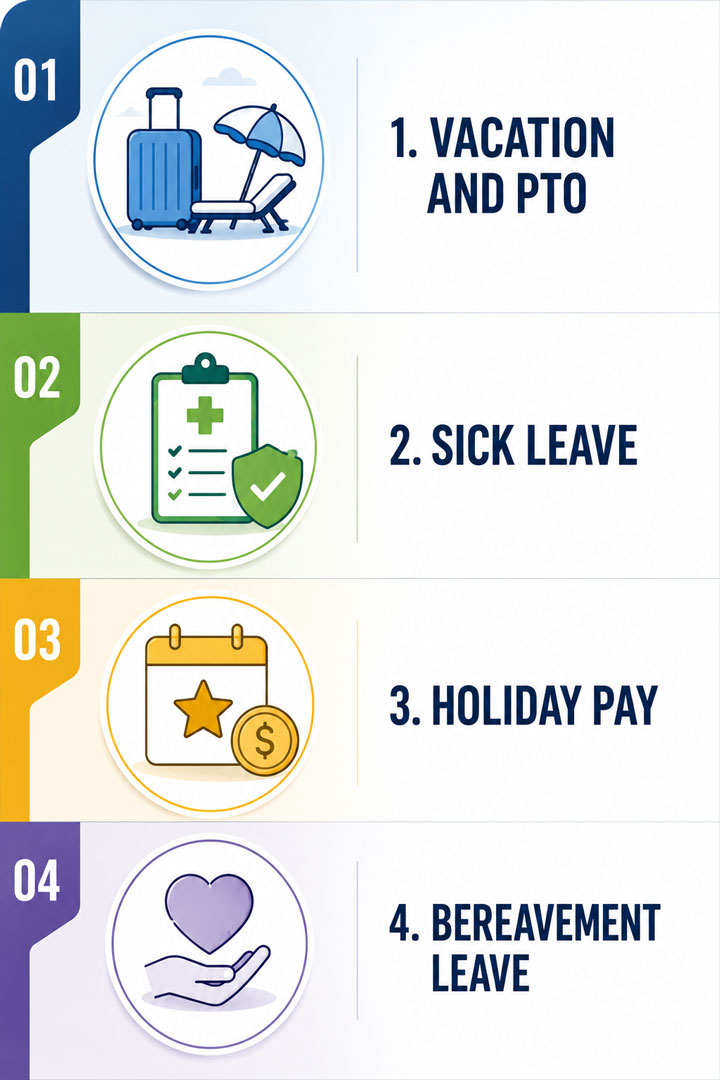
Vacation and PTO
Vacation and paid time off policies vary widely from employer to employer. Some companies use a traditional system with separate buckets for vacation, sick time, and personal days, while others combine everything into a single PTO bank. Key issues that arise with vacation and PTO include accrual rates and when leave becomes available, whether unused leave carries over from year to year or is subject to a use-it-or-lose-it policy, caps on the maximum amount of leave that can be accrued, whether accrued but unused leave must be paid out when the employee leaves the company, and restrictions on when leave can be taken.
West Virginia does not have a statute specifically requiring payout of unused vacation at termination. However, if the employer's policy or the employment contract promises payout, the employer must honor that commitment. Ohio takes a similar approach — the employer's own policy controls whether unused vacation is paid out. In both states, if the employer has an established practice of paying out unused leave, that practice can create an enforceable obligation even if it is not written into a formal policy.
Sick Leave
Neither West Virginia nor Ohio mandates paid sick leave for private sector employees at the state level, though some local jurisdictions and specific industries may have requirements. Where employers provide paid sick leave, the terms of the policy govern how it is accrued, used, and whether it is paid out at separation. Employers who provide sick leave cannot retaliate against employees for legitimately using it, and counting sick leave usage against employees in attendance or performance evaluations can create legal exposure, particularly when the absence qualifies for protection under the FMLA or the Americans with Disabilities Act.
Holiday Pay
No federal or state law requires private employers to provide paid holidays or to pay a premium rate for working on a holiday. Holiday pay is entirely at the employer's discretion. However, if the employer's policy promises holiday pay or premium pay for holiday work, the employer must follow its own policy. For hourly employees, holiday hours that are paid but not actually worked typically do not count toward the 40-hour overtime threshold unless the employer's policy states otherwise.
Bereavement Leave
There is no federal or state requirement for private employers to provide paid bereavement leave in West Virginia or Ohio. Some employers offer a few days of paid leave following the death of an immediate family member as a matter of policy. Where such a policy exists, the employer must apply it consistently and in accordance with its terms.
Client Reviews

























Public Employee Paid Leave
Public employees in West Virginia and Ohio generally have more robust paid leave protections than private sector workers. West Virginia state employees accrue annual leave and sick leave based on years of service, and these benefits are governed by statute and regulation. State employees who are terminated or who resign may be entitled to payout of accrued annual leave. Similarly, Ohio public employees are typically covered by civil service rules or collective bargaining agreements that provide detailed paid leave benefits. Public employee grievance processes are available when these leave rights are violated.
Common Paid Leave Violations
Even though paid leave is largely governed by employer policy rather than statute, employers frequently violate their own policies or engage in practices that create legal liability.
Failure to Pay Accrued Leave at Termination
When an employer's policy promises to pay out accrued vacation or PTO upon separation and then refuses to do so, the employee may have a claim for unpaid wages. In both West Virginia and Ohio, accrued leave that the employer has committed to paying out is considered earned wages, and failure to pay constitutes a wage violation under state wage payment laws.
Retroactive Policy Changes
Some employers change their leave policies retroactively — for example, eliminating carryover provisions or reducing payout commitments after employees have already accrued leave under the old policy. Depending on the circumstances, retroactive changes that eliminate leave employees have already earned may be unenforceable, particularly if the employees were not given adequate notice or if the change violates an employment contract.
Inconsistent Application
Employers must apply their leave policies consistently. If an employer approves leave requests for some employees but denies similar requests from others, the inconsistency may constitute discrimination if the disparate treatment correlates with a protected characteristic such as race, gender, age, or disability status.
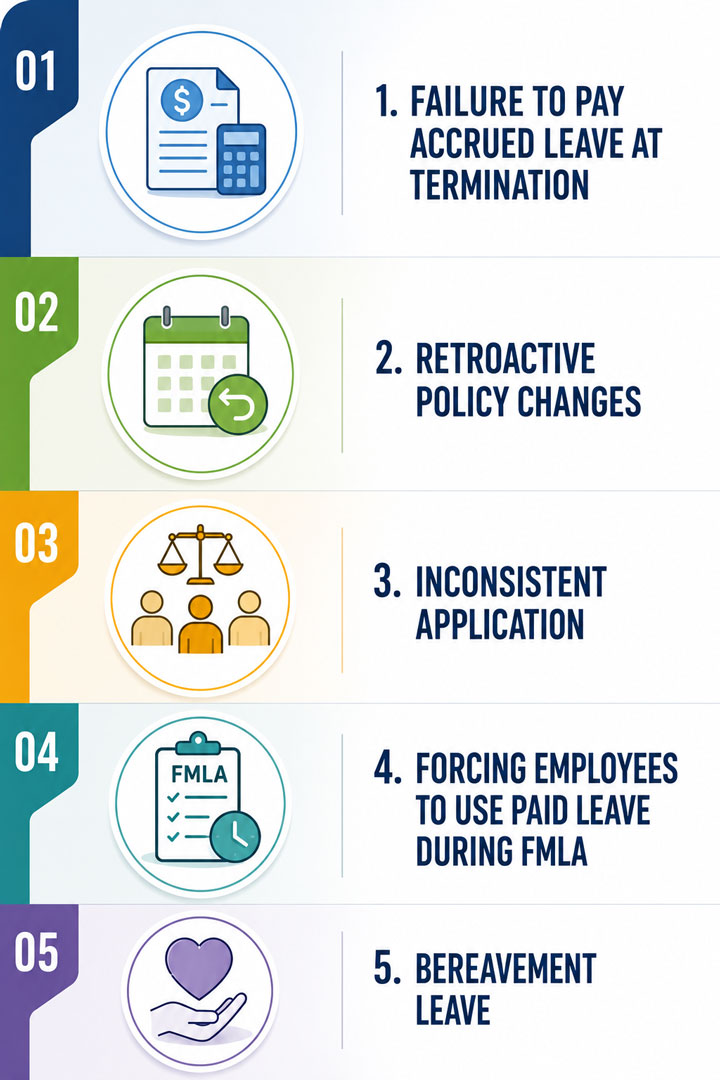
Forcing Employees to Use Paid Leave During FMLA
Employers are permitted to require employees to substitute accrued paid leave for unpaid FMLA leave, but they must follow specific rules. The substituted paid leave runs concurrently with FMLA leave and counts toward the 12-week entitlement. Employers cannot, however, require employees to use paid leave during FMLA leave and then deny them the full 12 weeks of FMLA protection. The interaction between paid leave policies and FMLA can be complex, and employers frequently get it wrong.
Bereavement Leave
There is no federal or state requirement for private employers to provide paid bereavement leave in West Virginia or Ohio. Some employers offer a few days of paid leave following the death of an immediate family member as a matter of policy. Where such a policy exists, the employer must apply it consistently and in accordance with its terms.
Helpful Shorts From Our TikTok
Klie Law Office F.A.Q
1. What should I do immediately after a personal injury accident?
After a personal injury accident, your safety comes first. Seek medical attention right away, even if you feel fine, as some injuries may not be immediately apparent. If possible, document the scene by taking photos, gathering witness information, and filing an accident report. Then, contact an experienced personal injury attorney at Klie Law Offices to discuss your rights and next steps.
2. How do I know if I have a valid personal injury claim?
If you were injured because of someone else’s negligence or reckless actions, you may have a valid personal injury claim. Common situations include car accidents, slip and falls, workplace injuries, and dog bites. Our attorneys offer free consultations to review your situation and determine whether you have a case.
3. How much is my personal injury case worth?
The value of a personal injury case depends on several factors, including the severity of your injuries, medical expenses, lost wages, pain and suffering, and long-term impacts on your life. Every case is unique, so we carefully evaluate the details to pursue the maximum compensation available under the law.
4. Will my personal injury case go to court?
Most personal injury cases are settled outside of court through negotiations with insurance companies or at mediation. However, if a fair settlement cannot be reached, Klie Law Offices is prepared to represent you in court and fight for the compensation you deserve.
5. How much does it cost to hire a personal injury lawyer at Klie Law Offices?
Klie Law Offices handles personal injury cases on a contingency fee basis. This means you pay no upfront costs, and we only get paid if we recover compensation for you. Your initial consultation is free, and we’ll explain all fees and terms clearly before you decide to move forward.

Civil Litigation Team
Civil Litigation Attorneys








Administrative Assistant

Civil Litigation Paralegals



Civil Litigation Practice Coordinator

Civil Litigation Law Clerk


West Virginia Wage Payment Protections
West Virginia's Wage Payment and Collection Act requires employers to pay all wages due to an employee upon separation, including compensation that has been earned under the employer's policies. If the employer's leave policy provides for payout of accrued leave, failure to include that amount in the final paycheck can violate the Act. The Act provides for recovery of the unpaid wages plus liquidated damages and attorney's fees, making it a powerful tool for recovering unpaid leave benefits.
Ohio Wage Payment Protections
Ohio's Prompt Pay Act and related wage payment statutes require employers to pay all compensation due upon termination. If accrued leave constitutes earned compensation under the employer's policy, it must be included in the final payment. Ohio employees who are not paid their full final wages may pursue claims through the Ohio Department of Commerce or through private litigation. Our Canton office attorneys are experienced in pursuing unpaid leave claims under Ohio law.
Protecting Your Paid Leave Rights
If you have concerns about your employer's paid leave practices, there are steps you can take to protect yourself. Obtain and save a copy of your employer's leave policy — whether it is in the employee handbook, a benefits summary, or an internal policy document. Track your leave accrual and usage independently so you have your own records. Keep copies of all leave requests and approvals. If your leave request is denied, ask for the reason in writing. And if you are leaving your job, review the policy carefully to understand what payout you are entitled to receive before your final day.
Why Choose Klie Law Offices
Paid leave disputes require attorneys who can analyze employer policies, identify violations, and apply the correct legal framework — whether the claim arises under a state wage payment statute, a breach of contract theory, or an anti-retaliation provision. At Klie Law Offices, our employment law team has extensive experience handling paid leave and wage payment claims throughout West Virginia and Ohio. We help employees recover unpaid leave benefits and hold employers accountable when they fail to honor their own commitments.

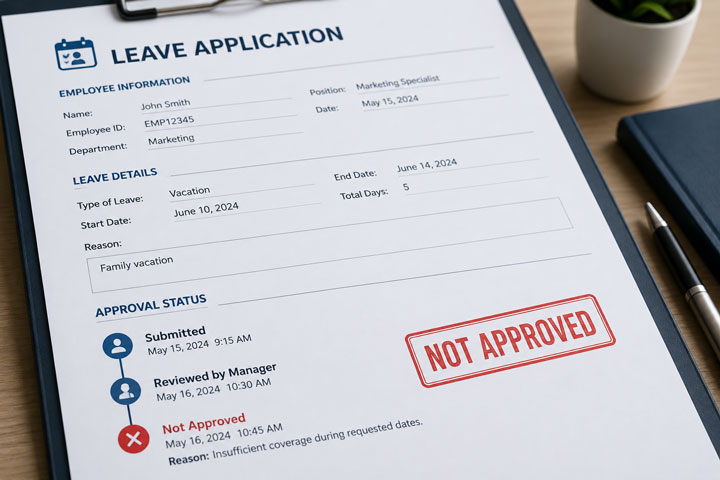
Not Getting the Leave You Were Promised?
If your employer is denying your earned paid leave, refusing to pay out accrued leave, or retaliating against you for using your benefits, contact Klie Law Offices for a free case evaluation, or schedule an appointment online. We serve clients from our offices in Buckhannon, Clarksburg, Morgantown, and Parkersburg in West Virginia, and Canton in Ohio.
Office Locations
Buckhannon
21 E Main St, Suite 160
Buckhannon, WV 26201
Map and Directions ↗
Parkersburg
300 Star Avenue, Unit 312
Parkersburg, WV 26101
Map and Directions ↗
Clarksburg
339 W Main St
Clarksburg, WV 26301
Map and Directions ↗
Morgantown
1300 Fort Pierpont Dr, Suite
102, Morgantown, WV 26508
Map and Directions ↗
Canton, OH
4150 Belden Village St NW
Suite 606
Canton OH, 44718
Map and Directions ↗
The first thing you’ll notice when you come to our Law Offices is that we’ll listen to your story. We want to know what you’re going through and what you need. Then, we’ll explain how West Virginia law applies to your specific situation and what your legal options are. There are no cookie-cutter answers here. We create a legal strategy tailored to each client’s individual needs.
Depending on your situation, we will find the right path forward. We are adept at resolving your legal matters through negotiation and mediation whenever possible. But we also won’t hesitate to take your case to trial if that’s what it takes to get the best possible outcome for you.
If you’re facing a legal challenge and need someone in your corner, don’t wait to get the help you deserve. Contact Klie Law Offices today to schedule a confidential consultation and take the first step toward a solution that works for you.